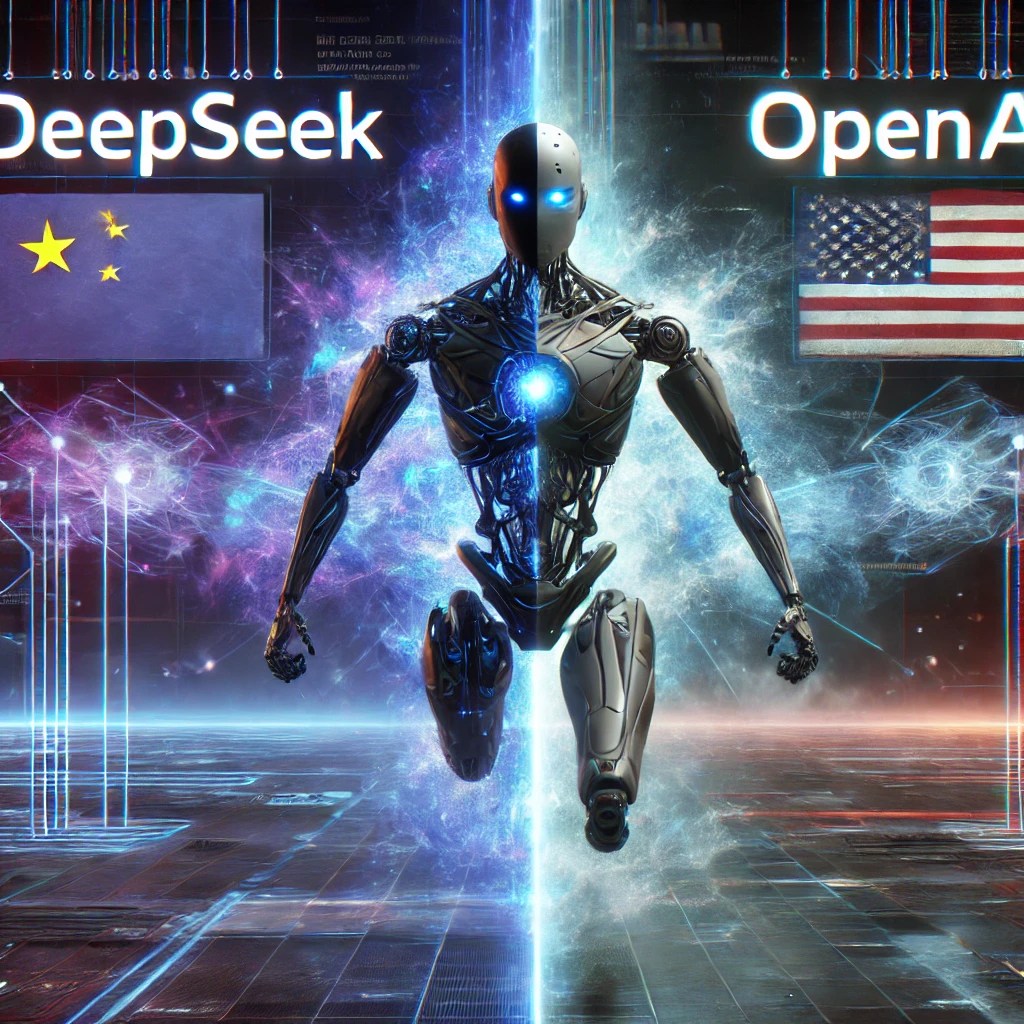
The world of artificial intelligence has witnessed significant developments in recent years, and the competition among industry giants is intensifying. In recent weeks, the open-source AI model by Chinese company DeepSeek has come into the spotlight, sparking debates among major players like OpenAI and Microsoft.
Initially, OpenAI CEO Sam Altman praised DeepSeek’s innovative aspects, but shortly afterward, he changed his stance, stating, “They stole our data!” This sudden shift caused a major stir both within the industry and worldwide. So, what was the reason behind this strong reaction?
DeepSeek attracts attention as an open-source AI model. According to initial claims, DeepSeek trained its model using the responses generated by large models like OpenAI’s GPT series. In other words, it underwent a “learning” process based on the outputs of OpenAI’s models.
It is reported that DeepSeek used a technique called “distillation” while training its model. This method enables the transfer of knowledge from a large, powerful model to a smaller one. For example, DeepSeek interacts with a large language model like GPT, collects the responses generated by that model, and then trains its own smaller model using this data.
Low Cost, High Performance: DeepSeek achieves high accuracy with fewer parameters, challenging the need for large data centers and expensive hardware investments.
Unlike OpenAI’s restrictive access policies, DeepSeek offers a more accessible solution for researchers, entrepreneurs, and public institutions with its open-source approach. This is seen as an important step toward the democratization of technology.
GPU manufacturers like Nvidia are benefiting from the demand for high-performance AI models. If DeepSeek can deliver similar performance with less hardware, the business models and investor expectations of these companies may face challenges. In fact, it is notable that some investors sold Nvidia shares even before DeepSeek’s market launch.
The emergence of DeepSeek has affected global geopolitical balances. In particular, the US and Europe view China’s development of such an AI model as a strategic threat.
The U.S. military and Congress are concerned about the risk of DeepSeek leaking data to the Chinese government and have serious worries about the model being used in military and strategic fields.
While Western countries have long accused China of technology theft, they are now witnessing Chinese researchers developing more efficient and innovative solutions. This situation is changing the dynamics of competition and international cooperation.
The U.S. and some European countries are imposing restrictions to prevent the spread of models like DeepSeek. These measures demonstrate that artificial intelligence is not only a commercial issue but also a matter of national security and strategy.
The competitive environment created by DeepSeek has prompted OpenAI to rapidly develop new strategies. Recent announcements of more compact models and innovative features show that OpenAI is trying to maintain its position in the competition. However, this situation also raises some important questions: the sustainability of high-cost models.
If more economical solutions like DeepSeek become widespread, how will investors in OpenAI’s large-scale models, which require billions of dollars in investment, react?
The growing popularity of open-source and efficient models may raise questions about OpenAI’s business model and the value it offers, which rely on high costs and closed ecosystems.
Giants that fail to innovate quickly may be left behind. OpenAI might have to make fundamental changes to its business model in order to convince investors and maintain its technological leadership.
The struggle between DeepSeek and OpenAI signals a broader transformation that will shape the future of artificial intelligence. Models that achieve higher efficiency with fewer resources will fundamentally change the industry. As a result, AI technology will become accessible not only to large corporations but also to small businesses, academic institutions, and governments.
As the U.S., Europe, and other Western countries view China’s progress in this field as a strategic threat, new security measures and regulations will come to the forefront. Technology giants like OpenAI, which rely on high-cost models, will have to reconsider their strategies to compete with more affordable alternatives like DeepSeek. This could lead to significant structural changes in the artificial intelligence ecosystem.
The accusation that DeepSeek “stole” OpenAI’s technology sparks deep discussions on ethical, technical, and strategic levels. Whether it is theft or a natural innovation process, at the heart of the debate lies the question of who will shape the technological infrastructure of the future.

Author: Omaykan Seyitoglu
 Technology Meets Creativity